972-727-5599
A chipped front tooth, a small gap between your two front teeth, or a patch of discoloration that whitening cannot reach, these are the kinds of concerns that seem small but quietly affect how comfortable you feel smiling in photos, meeting someone new, or speaking in front of a group. For many patients, the fix does not require anything elaborate. Dental bonding addresses these issues precisely, conservatively, and often in a single appointment.
At the office of Dr. Peter Hazim in Allen, Texas, cosmetic dentistry is guided by the principle that the best treatment is the one that achieves your goal while preserving as much of your natural tooth as possible. Dr. Hazim’s prosthodontic training, which includes his degree from Damascus University in Syria, continued education at the University René Descartes in Paris, France, and a residency at Loyola VA Hospital in Chicago, gives him a thorough understanding of dental materials, aesthetics, and how teeth function together as a system. That foundation shapes the precision and care that goes into every bonding procedure we perform.
What Dental Bonding Is
Dental bonding is a cosmetic procedure in which tooth-colored composite resin is applied directly to the surface of a tooth, sculpted into the correct shape, hardened with a curing light, and polished until it blends seamlessly with the surrounding enamel. The material can be matched to the exact shade of your natural teeth, making the treated area virtually undetectable when the procedure is complete.
A 2021 study published in Computational and Mathematical Methods in Medicine found that nanocomposite resin used in anterior cosmetic restorations produced higher patient satisfaction scores and lower rates of post-treatment sensitivity compared to conventional light-cured composite resin, reflecting the advances in modern bonding materials that make today’s results more durable and aesthetically refined than ever before. The evolution of these materials has made bonding one of the most reliable options for a wide range of minor cosmetic concerns.
What Bonding Can Treat
Dental bonding works well for a focused set of cosmetic issues where the tooth structure is otherwise healthy and the change needed is relatively minor. We commonly recommend it for the following situations:
- Chipped or fractured teeth: composite resin restores the original shape of a chipped tooth and protects the exposed area from further wear
- Small gaps: bonding material can close modest spaces between teeth, improving symmetry without orthodontic treatment
- Discoloration: stubborn stains that do not respond to professional teeth whitening can be concealed with a well-matched composite layer
- Irregular shape: teeth that appear too short, too narrow, or uneven at the edges can be reshaped with bonding for a more balanced appearance
- Exposed root surfaces: bonding can cover roots exposed by gum recession, reducing sensitivity and improving the look of the affected area
Each case is evaluated individually to confirm that bonding is the most appropriate solution before we proceed.
The Bonding Procedure
Most bonding procedures are completed in a single appointment and take between 30 and 60 minutes per tooth. Because the process is minimally invasive, anesthesia is generally not required unless the area being treated is near decay or is particularly sensitive.
We begin by selecting a composite resin shade that matches your natural teeth as closely as possible. The tooth surface is lightly conditioned to help the bonding material adhere securely, and the resin is then applied in layers, sculpted by hand to achieve the desired shape and contour. Each layer is cured with a special light before the next is added. Once the shaping is complete, we trim and refine the surface, then polish it to match the sheen of your surrounding teeth. Most patients leave the appointment with an immediately visible improvement and no recovery time required.
When Bonding Is the Right Choice and When It Is Not
Bonding is an excellent solution for minor cosmetic concerns, but it is not always the right tool for every situation. Because composite resin is more susceptible to staining over time than porcelain, patients who consume a lot of coffee, tea, or red wine may find that bonded areas need touch-ups more frequently than they would with porcelain veneers. For patients with multiple concerns across several teeth or more significant aesthetic goals, a coordinated smile makeover may produce more comprehensive and longer-lasting results.
During a comprehensive dental exam, we take the time to understand your specific concerns and walk you through the options that make the most sense for your teeth, your lifestyle, and your goals. That conversation shapes every recommendation we make.
Schedule Your Dental Bonding Consultation With Dr. Peter Hazim
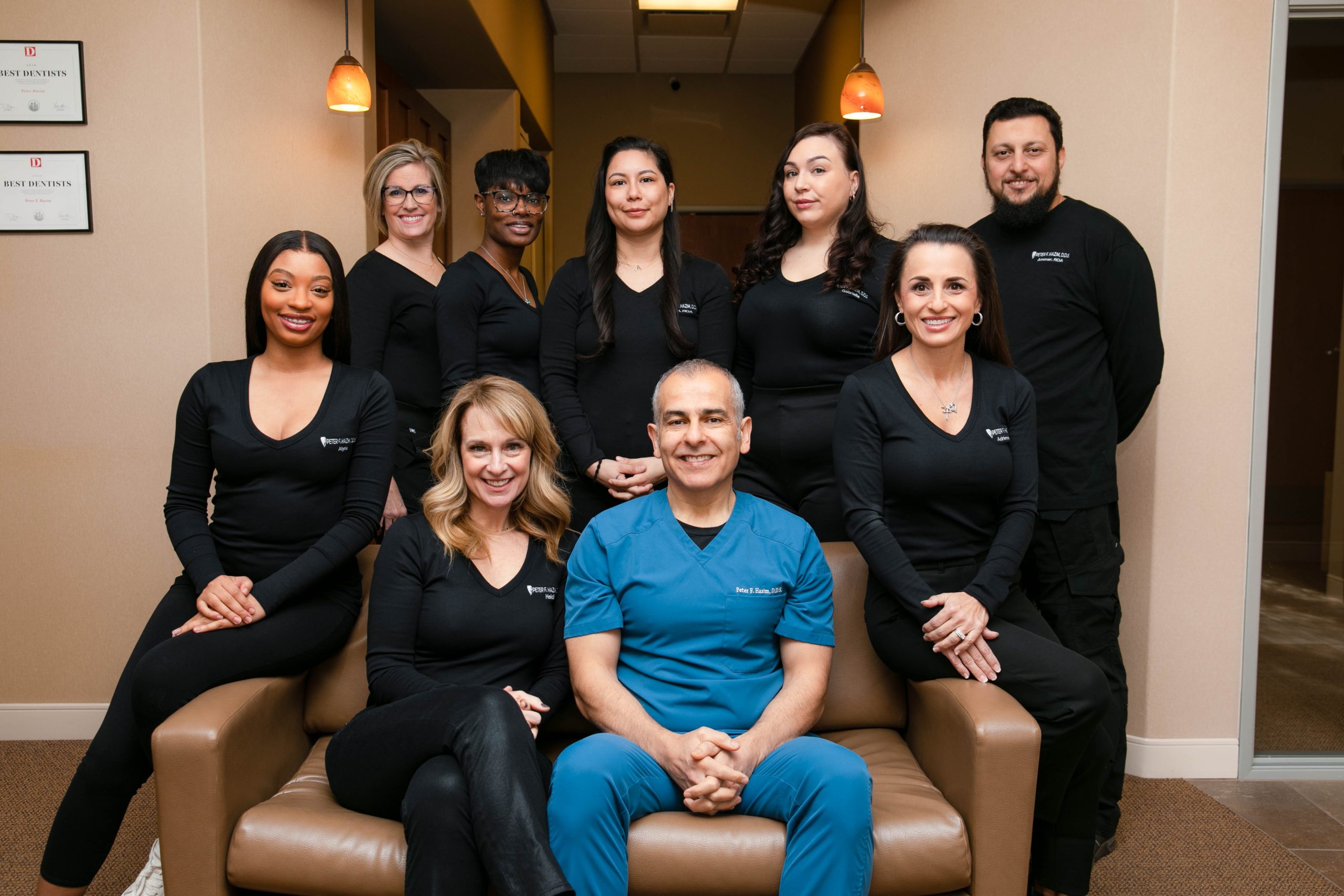
Dr. Peter Hazim has served the Allen community since 1999 and has been recognized as “Best Dentist in Dallas” by D Magazine from 2017 to 2022. His continued education through the Spear Institute and Pankey Institute keeps his cosmetic approach current with the latest materials and techniques. More about his training and philosophy is available through Dr. Hazim’s profile.
Our multilingual team welcomes patients from Allen, McKinney, Frisco, Murphy, Prosper, Plano, Parker, and surrounding North Texas communities. We are happy to file dental benefits claims on your behalf if you participate in a PPO plan, and we offer financing options through CareCredit and Cherry to make cosmetic care accessible. Contact our office to schedule your consultation and take the first step toward the smile you want.