
 972-727-5599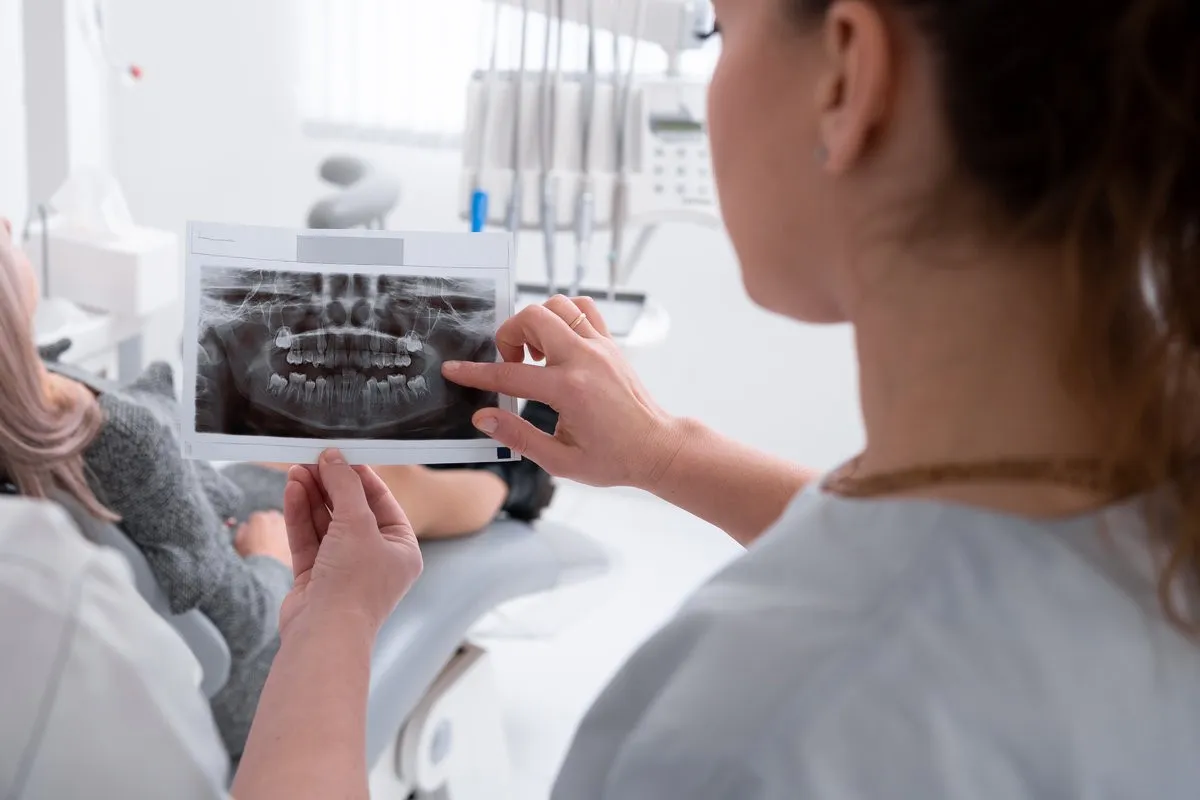
Most dental problems don’t announce themselves with pain until they’ve already been developing for months or even years. Cavities hiding between teeth, bone loss quietly advancing beneath the gumline, and early-stage infections are completely invisible during a standard visual exam. That’s what makes regular dental X-rays one of the most valuable tools in protecting your long-term oral health.
At Dr. Peter Hazim’s dental practice in Allen, Texas, we believe in staying ahead of problems before they require complex, costly treatment. Dr. Hazim is a board-certified prosthodontist and general dentist with training from Damascus University, the University René Descartes in Paris, and a prosthodontic residency at Loyola VA Hospital in Chicago. His internationally trained perspective shapes how we approach preventive care for every patient who walks through our doors, including our thoughtful use of diagnostic imaging.
What Dental X-Rays Can Reveal That a Visual Exam Cannot
A visual examination tells us a great deal, but it only shows the surfaces we can see. Dental X-rays give our team a complete picture of what’s happening beneath the gumline, between teeth, and inside the bone structure supporting your smile.
Detecting Cavities in Their Earliest Stages
Cavities between teeth and beneath existing restorations are nearly impossible to identify without imaging. By the time decay becomes visible to the naked eye, it has often progressed significantly, sometimes to the point where a simple filling is no longer an option. Our digital X-ray technology allows us to catch these issues when they are small and straightforward to treat, saving our patients significant time, discomfort, and expense.
Identifying Bone Loss and Gum Disease
X-rays are also critical for evaluating the bone levels around your teeth, which is a key indicator of periodontal health. Gum disease is one of the leading causes of tooth loss in adults, and it advances silently through its early stages. Imaging allows us to detect bone deterioration long before a patient notices symptoms, making earlier intervention possible.
How Often Should You Have Dental X-Rays Taken?
There is no single answer that applies to everyone, and that’s by design. The American Dental Association confirms that dental imaging should be ordered only after evaluating each patient’s medical and dental history, prior images, and current clinical findings, not on a set schedule applied universally. At our practice, we take the same individualized approach.
Patients with a low risk of dental disease and a stable history may only need bitewing X-rays every two to three years. Those with a higher risk, active decay, a history of gum disease, or ongoing restorative treatment may need imaging more frequently. New patients almost always benefit from a full set of X-rays, which establishes a baseline that we can refer back to at every future visit to monitor any changes over time.
X-Rays and Overall Health
Oral and systemic health are closely connected, and X-rays play a supportive role in both. Infections at the root of a tooth or in the jaw can go undetected for extended periods without imaging. At our dental exams and cleanings, we review X-ray findings alongside your full health history to ensure nothing falls through the cracks.
Dental X-rays also allow us to identify potential oral cancer and abnormal growths in the jaw, including cysts and tumors that produce no symptoms in their earliest stages. Catching these findings early can be life-changing.
Are Dental X-Rays Safe?
This is one of the most common questions we hear, and the answer is reassuring. Modern dental X-rays expose patients to very low levels of radiation. In fact, a bitewing X-ray delivers a radiation dose lower than what the average person receives from natural background radiation in a single day. At our practice, we follow the ALARA principle, which stands for “as low as reasonably achievable,” meaning we only recommend X-rays when they provide clinically meaningful diagnostic value.
Schedule Your Next Visit With Dr. Peter Hazim
Regular dental X-rays are not just a formality. They are a cornerstone of preventive care that allows us to catch problems early, monitor your oral health over time, and help you avoid more complex treatments down the road. Dr. Hazim’s more than two decades of clinical experience and internationally recognized training mean that every diagnostic decision we make is backed by both expertise and care.
If it’s been a while since your last set of X-rays, or if you’re looking for a dental home that takes a thorough, patient-centered approach to your oral health, we’d love to meet you. Contact our office to schedule your appointment with Dr. Peter Hazim and our multilingual team today.
